Most bathroom renovation advice starts with layout and finishes. In this part of Sydney there is a question that comes before either, and getting it in the wrong order is what turns a planned three-week job into a stalled one.
The housing here is largely 1950s to 1980s fibrous-cement and brick veneer, and this area is named among those with high concentrations of fibro stock. In housing of that era, bonded asbestos sheeting in wall linings, eaves and wet-area soffits is not a remote possibility. It is the default assumption until somebody qualified establishes otherwise.
Before any trade opens a wall in a house of this age, have the material identified by someone qualified to do it. If it is bonded asbestos sheeting, removal is licensed work of its own and happens before the plumbing, not alongside it. SafeWork NSW is the authority on how that is handled. We will not cut, drill or grind material we have reason to think contains asbestos.
- Assume it is present in a 1950s to 1980s wet area until it is checked
- Get it identified before the job is scheduled, not on the first morning
- Removal is a separate licensed trade and comes first
- Only then does the plumbing rough-in get planned
- Keep the paperwork with the house documents
On this page
1. Why this question comes before the layout
A bathroom renovation is a sequence: strip out, rough-in, waterproof, tile, fit off. Every trade in that sequence depends on the one before it having finished. That is ordinarily fine, because the sequence is predictable.
What breaks it in housing of this age is discovering the wall lining is a problem on the morning the strip-out starts. At that point the job stops, everybody who was booked has to be rescheduled, and the household is living without a bathroom for considerably longer than anybody planned.
None of that is dramatic or unusual. It is entirely avoidable by asking the question a few weeks earlier, when the answer is just an answer rather than a delay.
Bonded material in good condition, left undisturbed, is routinely lived with. What changes things is disturbing it, which is exactly what a renovation does. So it becomes a scheduling question rather than a reason to stop.
2. What is likely to be there, in this housing
Fibrous-cement homes of the 1950s and 1960s almost certainly contain bonded asbestos sheeting in wall linings, in the eaves and in wet-area soffits. Brick veneer homes from the 1950s through the 1980s commonly used asbestos cement sheeting in wet areas, under eaves and in garage linings, even where the outside of the house gives no hint of it.
That last point is the one that catches people. A brick house does not read as a "fibro house", so the assumption is that the issue does not apply. Inside the wet area it very often does, because that is where sheeting was used.
We are plumbers and not assessors, so we are not the people to tell you what a particular sheet is. What we can tell you is that in housing of this age and type it is common enough that assuming its absence is not a reasonable starting position.
3. What we will not do, and why we say so up front
We will not cut, drill, grind or sand material we have reason to think contains asbestos in order to get a pipe through it. Not for a small hole, not to save a day, and not because somebody on site says it will be fine.
That is worth stating plainly because the pressure to do it is real. A rough-in needs penetrations through walls and floors, and it is always faster to make them than to stop and reschedule. A plumber who makes them anyway is creating dust in an occupied house, and it is not their household that lives with it.
The consequence for the customer is straightforward: if we arrive and the material has not been identified or dealt with, we will tell you rather than proceed. Being told that at the quoting stage is a great deal better than being told it on the day.
Removal of this material is licensed work with its own rules, and SafeWork NSW is the authority on it. Taking a sheet off over a weekend to keep the job moving is the one shortcut here with no way back.
4. The order that actually works
- Identify the material. Have the wall and ceiling linings assessed by someone qualified to do it, before the job is booked.
- If it is present, arrange licensed removal. That is a trade of its own with its own paperwork, and it happens before other trades come in.
- Then the plumbing rough-in. With open, safe walls, a rough-in is straightforward and the pipework can be renewed while it is accessible.
- Then waterproofing to the current standard. This is the point of doing it properly, and in a house of this age it is often the first time the room has had a membrane built to a modern standard.
- Then tiling and fit-off. The visible part, and the shortest part.
Laid out like that it looks obvious. It is worth writing down because the pressure in a real renovation always runs the other way: get the trades in, keep them moving, sort the rest out as it comes up.
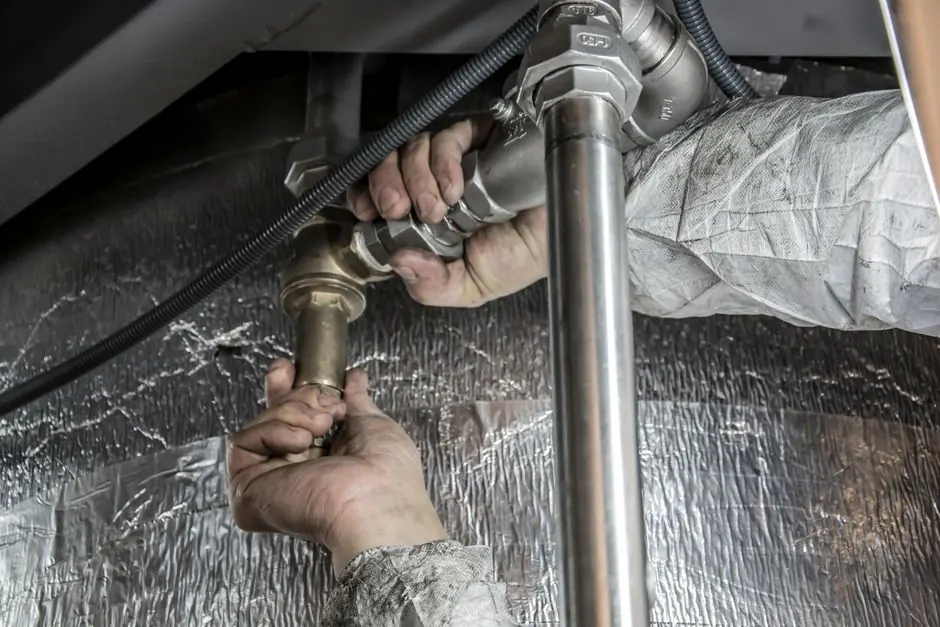
5. Renew the pipework while the wall is open
This is the genuinely useful plumbing advice, and it gets skipped because the pipework is not what anyone is excited about. In a house of this age the supply lines and the waste behind that wall are frequently original, which puts them on the same clock as everything else in the room.
Renewing them while the wall is open costs a fraction of what it costs to reach them again through new tiles and new waterproofing. Leaving them and hoping is how a two-year-old bathroom gets opened up.
- Supply lines to the shower, basin and toilet, while they are reachable
- The shower waste and its connection, which is where old work most often weeps
- Isolation valves, so the next repair does not mean shutting the whole house off
- Anything galvanised, which is the one material worth replacing on sight rather than testing
Planning a bathroom in a house of this age?
We will quote the plumbing honestly and tell you what has to happen before we can start.
6. The paperwork worth keeping afterwards
Renovations in this housing generate documents that matter later, and they get lost because nobody has a place for them. Keep them together with the house papers.
- Anything issued by whoever assessed or removed the wall linings
- The waterproofing documentation for the new wet area
- Compliance paperwork for the plumbing work
- Photographs of the open wall before it was closed up, which cost nothing and are worth a great deal to whoever works on the room next
That last one is the cheapest thing on this page and the one people thank themselves for years later. Ten photographs of an open wall answer questions that otherwise cost a call-out to re-establish.
- In 1950s to 1980s housing here, assume bonded asbestos in wet-area linings until it is checked.
- Brick veneer houses of that era used the same sheeting inside wet areas as fibro homes did.
- Identify the material before the job is booked, not on the first morning of the strip-out.
- Removal is licensed work of its own and comes before the plumbing. SafeWork NSW is the authority.
- We will not cut, drill or grind material we have reason to think contains asbestos.
- Renew the supply lines and waste while the wall is open. Reaching them later costs many times more.
Renovating a wet area in fibro FAQs
How do I find out what my wall linings are?
Have them assessed by someone qualified to identify the material. It is not something to judge by eye, ours included, and it is not expensive relative to a renovation. Do it before the job is scheduled so the answer is information rather than a delay.
Can you just drill a small hole for the pipe?
No. Not a small one, not a quick one, and not because the job is running late. If the material has not been identified or dealt with, we will stop and tell you rather than make the penetration.
Does this apply to a brick house?
Often, yes. Brick veneer homes from the 1950s to the 1980s commonly used asbestos cement sheeting inside wet areas, under eaves and in garage linings. The brick outside says nothing about the lining inside the bathroom.
Will this add a lot of time to the renovation?
Handled in the right order it adds a defined step at the start. Handled in the wrong order it stops the job mid-strip-out and every booked trade has to be moved, which is what actually costs the weeks.
Should I replace the pipework as well?
While the wall is open, almost always. The pipes behind a 1960s wet area are usually as old as the room, and the cost of renewing them at that moment is a fraction of reaching them again through new tiles and a new membrane.
Who is the authority on any of this?
SafeWork NSW for how the material is handled, and a qualified assessor for what it actually is. We are plumbers. Our part is telling you the order, doing the plumbing properly, and not creating a problem in your house to save ourselves an afternoon.