Water where it should not be, and getting worse while you watch. We make it safe first, find where it is actually coming from, then quote the repair. In this housing the culprit is usually galvanised pipe that has been rusting from the inside for decades.
Online Now!·--:--
A burst almost never comes out of nowhere. Something has been working on that pipe for years, and out here which something depends almost entirely on when the house went up.
In the post-war streets through Blacktown, Seven Hills, Lalor Park and Marayong the original run is galvanised steel, and it corrodes from the inside out. The wall thins quietly for a decade before anything reaches the surface, so the warning is falling pressure or a brown first flush in the morning rather than water on the floor. By the time one lets go it has been failing for years.
Under both halves of the district is the same reactive clay over Wianamatta shale. It swells through a wet spell and shrinks back through a dry one, and everything buried in it moves with the seasons. A joint flexed through a few thousand of those cycles eventually opens. It is the same ground movement that cracks sewers, working on the pressurised side of the plumbing instead, which is why a burst here so often turns up with the first heavy rain after a long dry.
Out in the newer estates the pipework is generally sound and the fittings are the weak point. Braided flexi hoses under vanities and behind laundries have a service life of about a decade, and the first wave of them is reaching it now. When one fails it does not weep quietly, it empties the mains into the room at full pressure.


On a burst we talk you through the stop tap while the van is moving, so the damage stops before anyone arrives rather than after.
The meter is near the front boundary on the standard block here, often close to the driveway. The tap beside it turns the whole house off, clockwise until it stops. The single biggest factor in what a burst costs is how long it ran, so this is worth locating on a quiet Sunday rather than at midnight.
If water is anywhere near power points, lights or the switchboard, switch that circuit off. Do not walk through standing water to reach it. If that means waiting for us, wait.
With the mains off, opening a downstairs or outside tap drains the pipes and releases the pressure behind the break, so it stops actively pushing water into the building while you wait.
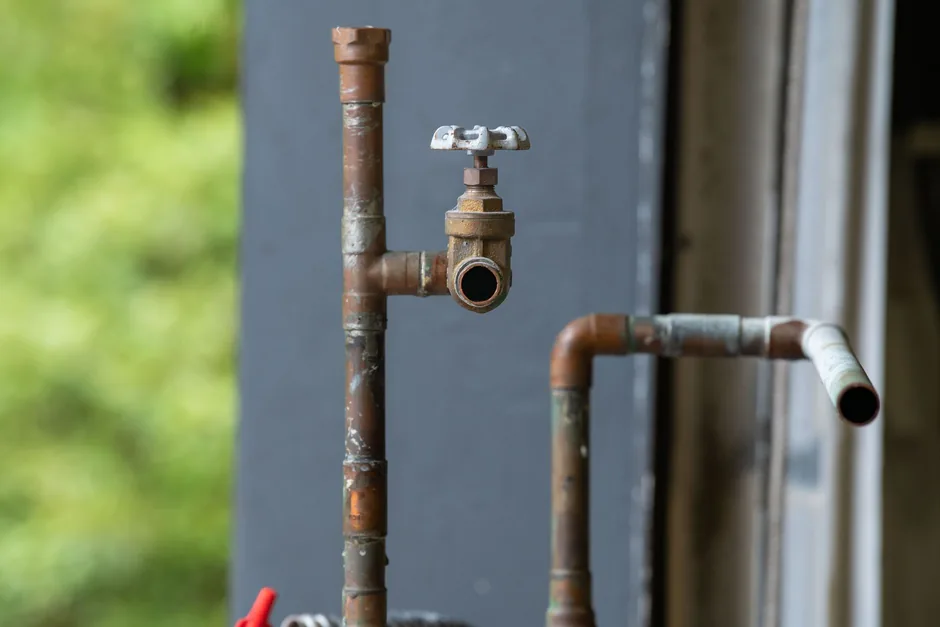
The post-war houses here were plumbed in galvanised steel, and it corrodes from the inside out. The outside of a pipe can look completely sound while the bore has narrowed to a fraction of its original diameter and the wall has thinned to almost nothing.
That explains two things people find strange. Why water pressure drops so gradually that nobody notices until a visitor mentions it. And why a burst arrives with no warning at all, often as a pinhole inside a wall cavity rather than a dramatic failure you can see.
It also means galvanised does not like being disturbed. A section that has held for sixty years can start weeping after work nearby nudges it, which is worth knowing before you agree to have someone poke around in it for an unrelated job.
The clay across the district is highly plastic, swelling and shrinking through every wet and dry cycle. That works steadily on joints and on the point where a pipe enters the building.
The second half of the problem is drainage. This soil does not shed water, so anything escaping underground stays where it is instead of draining away. A leak that would dry out and announce itself elsewhere can sit here quietly, saturating the ground around footings and buried services.
This is the part specific to western Sydney and worth understanding. Urban salinity is a documented issue across this region, and leaking underground pipes are named among its causes: the extra water mobilises salt already present in the soil and draws it toward the surface.
Concentrated salt attacks concrete, mortar and buried metal over time, and sulfate levels near the creek lines compound it. It shows up as crumbling mortar, eroded brick and corroding metal rather than anything sudden.
So a slow leak out here is not simply a water bill running higher than it should. Left long enough it works on the things around it. That is the honest argument for fixing small leaks promptly, and it is a better one than urgency for its own sake.
Out through Schofields, The Ponds and Riverstone the failure mode is completely different. Those homes are barely a decade old and plumbed in modern materials, so what fails is the braided flexi hose under a vanity or sink.
They have a finite life and they fail without warning, usually at full mains pressure into a cabinet nobody opens daily. If your house is around ten years old and the hoses have never been changed, that is the cheapest preventative job on this page.
The difference between locating a leak and searching for one is, on a block this size, the difference between a small repair and a trenched lawn. So we test before we dig.
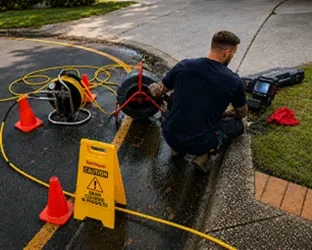
Pressure testing establishes whether the system is genuinely losing water and roughly how fast, which narrows the search before anyone picks up a tool. Acoustic and thermal work then position it. Only then does anything get opened up.
There is one test you can run yourself before calling, and it costs nothing. Close every tap in the house, then watch the meter. If it is still creeping, water is going somewhere it should not be, and that single observation tells us more than a description of the wet patch.
Burst and pinholed mains, failed galvanised runs, slab leaks, leaking taps and mixers, failed flexi hoses, toilet and cistern leaks, and the connections behind washing machines and dishwashers.

A burst is quoted before we start, same as anything else. These are indicative 2026 Sydney ranges. What moves them here is the age of the house: cutting a failed section out of galvanised in a post-war street is a different job to replacing a flexi hose under a two-year-old vanity.
Waived when you book through this site. Booked another way, standard attendance sits at the upper end.
Pressure testing plus acoustic and thermal location, so the repair opens one spot rather than several.
The common case: isolate, repair the failed section, test and make good.
Where patching a pipe that is corroded end to end would simply move the next failure a metre along.
Nights, weekends and public holidays. If it can safely wait for daylight we will tell you so.

Before anything else we talk you through the meter and the switchboard, because what happens in the next two minutes decides most of what this costs.

The van arrives, the water stays off, and we contain what has already escaped before any diagnosis begins. Nothing gets quoted while water is still moving.

Pressure test, then acoustic and thermal to position it. On a big block this is what keeps the repair to one opening instead of an exploratory trench.

Fixed figure approved before the repair starts. If what we find changes the job, you approve a new number rather than meeting it on the invoice.
Turn the mains off at the meter and call. We will tell you what to do in the next two minutes while a licensed plumber is already on the way.
Call 1300 381 569
Turn the water off at the meter, which on the standard Blacktown block sits near the front boundary, often close to the driveway. Turn the tap beside it clockwise until it stops. Then kill power to any circuit near where water is spreading, without walking through standing water to reach the switchboard. Last, open the lowest tap in the house, usually outside or in the laundry, which drains the pipes and takes pressure off the break so it stops pushing water into the building.
Because galvanised steel corrodes from the inside out, and the post-war housing here was plumbed in it. The outside of the pipe can look perfectly sound while the bore has narrowed to a fraction of what it was. That is why pressure drops slowly over years and then a pinhole appears in a wall cavity with no warning. It is also why galvanised does not like being disturbed: a section that has held for sixty years can start weeping after unrelated work nudges it.
Out here, yes, by a route people do not expect. Western Sydney has a well-documented urban salinity problem, and additional water from leaking pipes is named among the things that mobilise salt in the soil and draw it toward the surface. Concentrated salt degrades concrete, mortar and buried metal over time, and sulfate levels near the creek lines make it worse. It is slow rather than an emergency, which is exactly why small leaks are worth fixing here rather than watching.
It might be, and it might just be the ground. The clay across Blacktown drains badly, so water sits rather than soaking away and a yard can stay saturated for days after ordinary rain. What separates a leak from normal drainage is whether the patch persists through dry weather, and whether your meter creeps with every tap in the house closed. That second test costs nothing and is worth doing before you call anyone.
Pressure testing first, to establish whether the system is losing water at all and roughly how fast. Then acoustic and thermal work to narrow the position before anything is opened. On a large block that matters, because the difference between locating a leak and searching for one is the difference between a small repair and a trenched lawn.
As a 2026 guide, a burst made safe and repaired typically lands between $250 and $700, leak detection runs about $250 to $550, and a run of failed galvanised that needs replacing rather than patching is quoted on what the section requires. You approve a fixed figure before anything starts.
Usually the damage is, and the pipe itself usually is not. Most policies cover water damage to the building and contents from a sudden burst, but exclude the cost of repairing the failed pipe, and many exclude damage from a leak that has been seeping gradually rather than bursting. That distinction is why it is worth acting on falling pressure or a creeping water bill instead of waiting. We document what failed and why, with photos, because that is what the insurer will ask for. Check your own product disclosure statement, policies differ more than people expect.
Tell us where the water is, whether you have managed to get it off at the meter, and roughly how old the house is. Those three answers decide what we bring.
If it is genuinely an emergency we get someone moving straight away. If it can safely hold until morning and save you the after-hours rate, we will say so.
Online Now!·--:--